Taking It One Drum at a Time
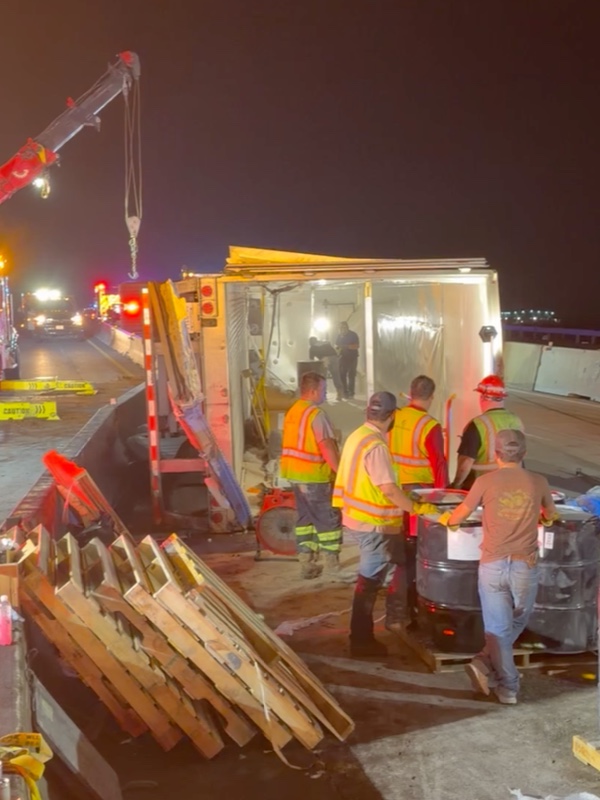
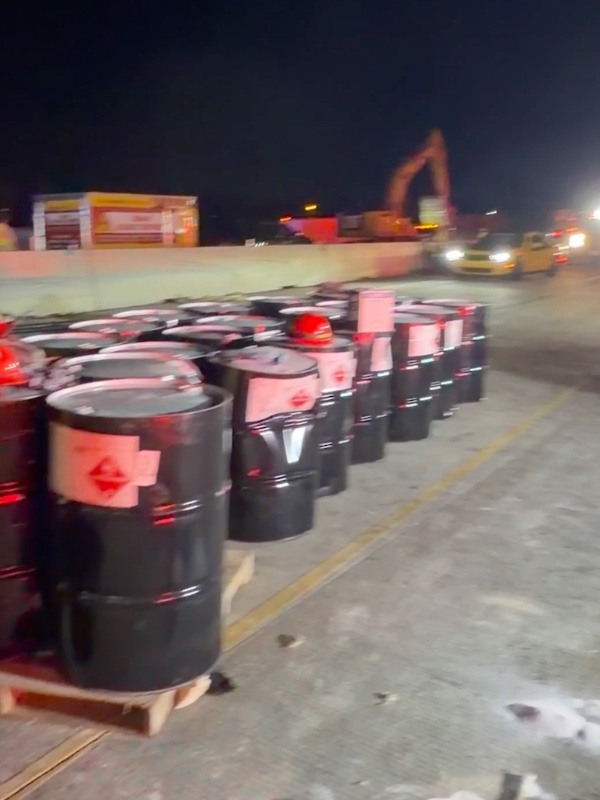
It was around 7:00 p.m. on September 4, and evening traffic was well underway when a tractor-trailer overturned in the westbound lanes of Interstate 30 near Bucee’s in Royse City, Texas. The crash happened inside an active construction zone, where concrete Jersey barriers confined traffic and left responders very little room to work. The cargo made the situation considerably more dangerous: 55-gallon drums of ethyl methacrylate, a highly flammable liquid with a flash point between 60 and 70 degrees Fahrenheit. The load weighed more than 40,000 pounds, and responders identified an approximately 50-meter blast radius. What followed became a complicated Royse City hazmat recovery, where the cargo dictated what crews could and could not do with the trailer.
Why Uprighting the Loaded Trailer Was Not an Option
Around 11:00 p.m., Massey’s Towing & Recovery, which had the original call, requested that our dry van be sent to the scene to store and transport the chemical load from the damaged commercial vehicle. After several hours at the scene, Lonestar Hazmat would not proceed with offloading because of the health and safety risks. Instead, the crew asked whether the trailer could be uprighted with the drums still inside.
At approximately 2:30 a.m., they contacted our recovery specialist Kyle for guidance. Kyle reviewed photographs and joined a FaceTime call to get a better look at the situation. We couldn’t determine from a screen whether the trailer would withstand being uprighted, so Kyle went to inspect it in person.
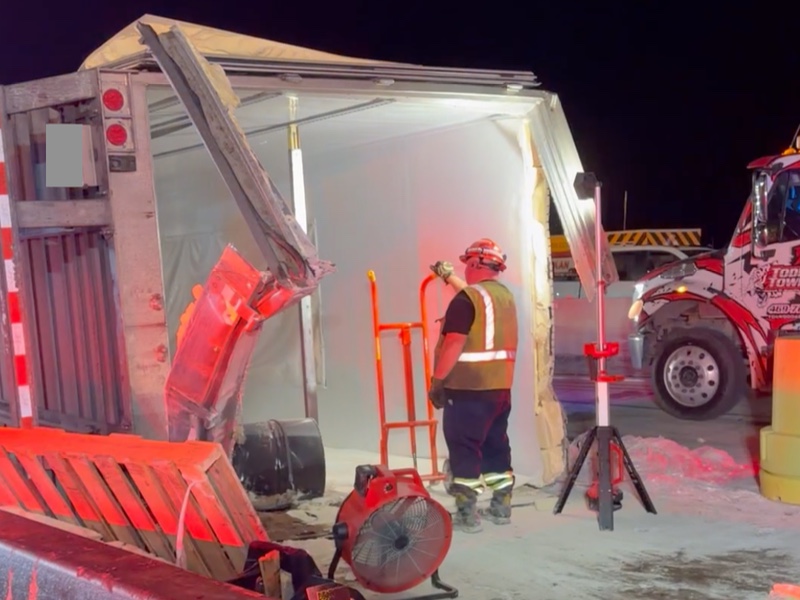
Once we arrived, we could see how badly the crash had compromised the trailer. The impact had ripped the fifth-wheel plate and its supporting structure from the front of the trailer. At the other end, the rear frame surrounding the trailer doors had also suffered severe damage.
That left us looking at a trailer with compromised structural support at both ends and more than 40,000 pounds of flammable cargo still inside. If we tried to upright it loaded, the trailer could come apart and the drums could shift or rupture. We made the call: the cargo had to come out first.
No Metal Tools Around This Load
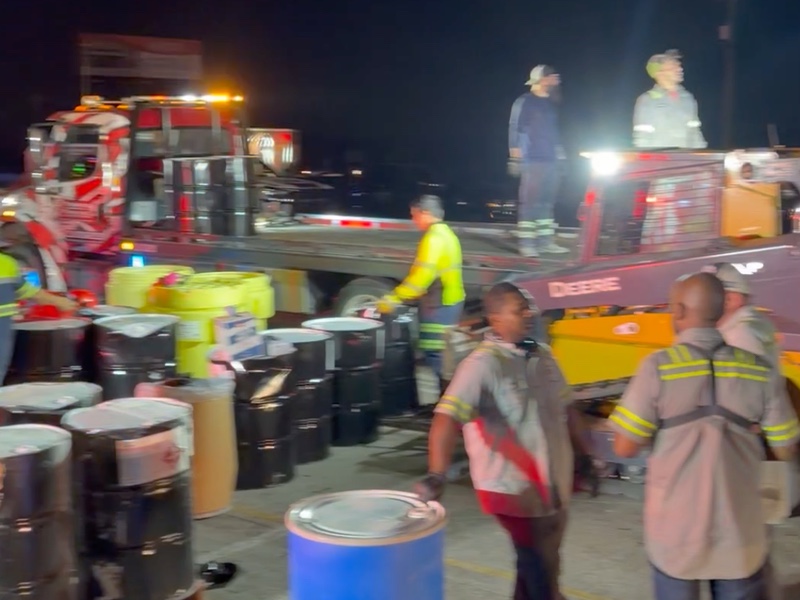
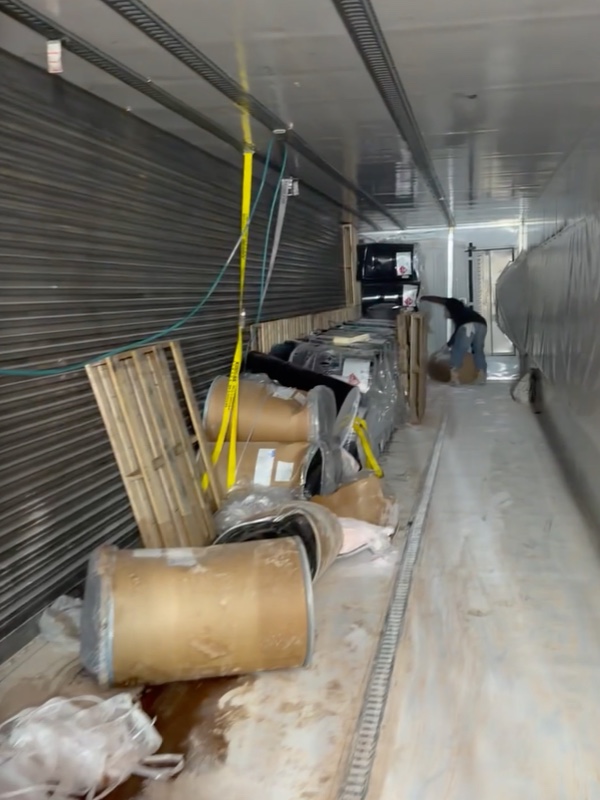
We took the lead alongside Lonestar Hazmat and Massey’s Towing & Recovery. For this hazmat recovery in Royse City, the drums had to come out individually, despite having shifted, overlapped, and become wedged together. The flammable contents also ruled out metal tools that could create a spark.
Wearing respirators and protective equipment, we worked in three-person teams using SAVA air-cushion bags to separate and lower the drums. We then moved them out of the trailer one at a time with a drum hand truck.
Our process included:
- Separating or supporting wedged drums with air cushions
- Maneuvering each drum with a three-person team
- Keeping metal tools away from the flammable load
- Repositioning each drum for removal
- Moving each drum out with the drum hand truck
There was no shortcut. We had to complete the offload before we could move on to recovering the trailer.
Two Rotators Finish the Recovery
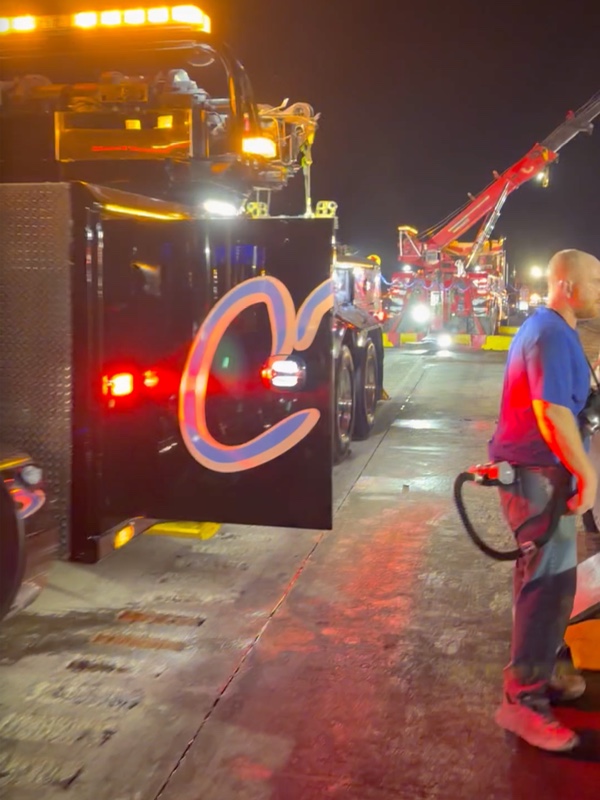
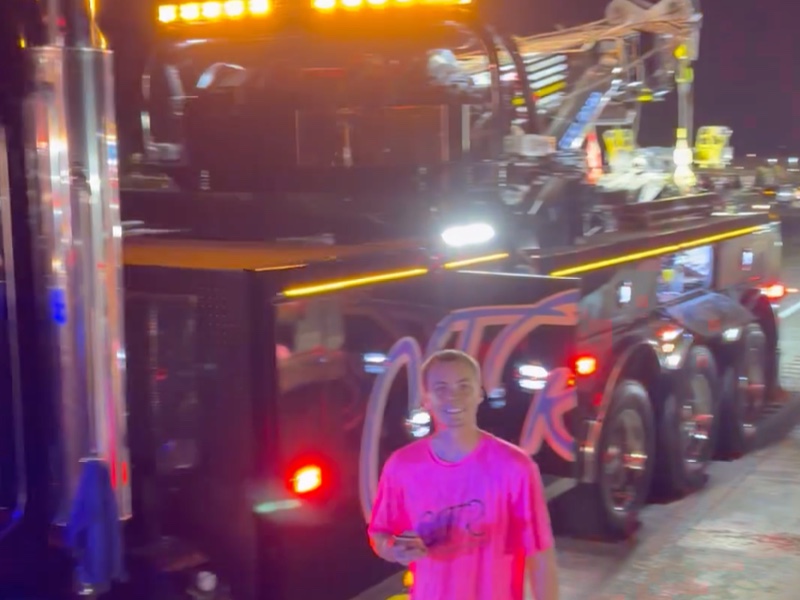
Once the cargo was out, our 2023 Peterbilt Century 1150, a 50-ton rotator designated CTR14, worked alongside Massey’s rotator to lift, reposition, and upright the damaged trailer. For hazardous-load recovery near Royse City, using two rotators was the final stage of a plan that depended on unloading first.
We then joined Lonestar Hazmat and Massey’s to address diesel and oil contamination from the tractor. From our arrival through final cleanup, this I-30 hazmat recovery near Royse City took approximately six hours, without a secondary incident.
CTR Towing: Expert Help for Royse City Hazmat Recovery on I-30
By the time we took the lead, the crash had already tied up I-30 for more than seven hours. We had initially been asked to supply a dry van, but the situation changed when Kyle examined the trailer’s torn fifth-wheel support and damaged rear frame. Heavy-duty hazmat recovery in Royse City meant ruling out an upright with the load still inside, even though that required hours of careful drum handling.
Working with Lonestar Hazmat and Massey’s, we offloaded more than 40,000 pounds of flammable cargo, used two rotators to upright the empty trailer, and helped address contamination from the tractor. Our Royse City hazardous cargo recovery followed a clear sequence: remove the load, recover the trailer, then finish the cleanup. Together, we moved an operation that had stalled for hours toward reopening I-30 without a secondary incident.
Frequently Asked Questions
What chemical was involved in the overturned trailer?
The trailer was carrying ethyl methacrylate, a highly flammable liquid transported in 55-gallon drums. Its reported flash point was between 60 and 70 degrees Fahrenheit.
How much hazardous cargo was inside the trailer?
The cargo weighed more than 40,000 pounds. The exact number of drums was not confirmed.
Why couldn’t the trailer be uprighted with the cargo inside?
The fifth-wheel support structure had been torn away, and the rear frame was severely damaged. Uprighting the loaded trailer risked further structural failure and rupturing the chemical drums.
Why was a dry van requested?
Massey’s Towing & Recovery requested our dry van to store and transport the chemical load after offloading. The recovery plan later required an on-site inspection before the drums could be removed.
What equipment did CTR Towing use to upright the trailer?
We used CTR14, our 2023 Peterbilt Century 1150 50-ton rotator. It worked alongside a second rotator from Massey’s Towing & Recovery.
How long did the recovery take?
From our arrival through final cleanup, the operation took approximately six hours. The interstate had already been affected for more than seven hours before we took the lead.