Getting stuck happens fast. One wheel drops off the pavement, the shoulder gives way, or the tires start spinning in mud that looked solid a minute ago. CTR Towing handles off-road recovery across Dallas, from winch-outs to vehicles sitting deep in a ditch or partway down an embankment. We get your vehicle back onto firm ground and, if it can drive, back on the road. If it can’t, we tow it where it needs to go.
Pulling a stuck vehicle out the wrong way can bend a frame, rip off a bumper, or roll it onto its side. Our operators assess how the vehicle is sitting, how soft the ground is, and where the strongest anchor points are before hooking up. We use winches to pull slowly and in a controlled way, which means less damage to your vehicle and a safer scene for everyone nearby.

To learn more about our 24/7 Off-Road Recovery Service and to speak to a member of our team, call us at
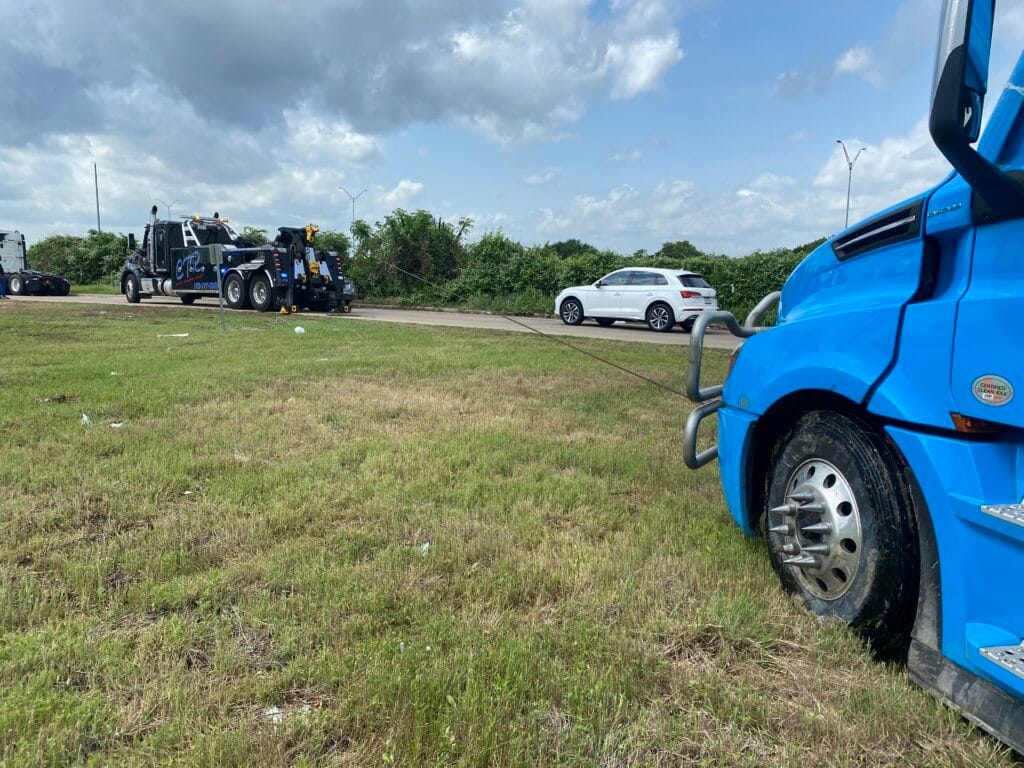
Off-road recovery isn’t limited to pickups on a muddy trail. Sedans slide off wet shoulders, delivery trucks sink in soft lots, and loaded semis drop a wheel off a highway. CTR Towing brings light, medium, and heavy duty recovery equipment, so we can match the gear to the vehicle. If it’s stuck and you can’t get it out, call us.
North Texas weather can turn solid ground into a problem quickly. Heavy spring rain softens shoulders and job sites, black clay soil turns slick and sticky, and the occasional ice or snowstorm sends cars sliding across overpasses and into medians. We recover vehicles from mud, standing water, ice, gravel, sand, and steep grades. Each surface behaves differently under load, so our operators adjust their rigging and pull angle based on what the ground will actually hold.
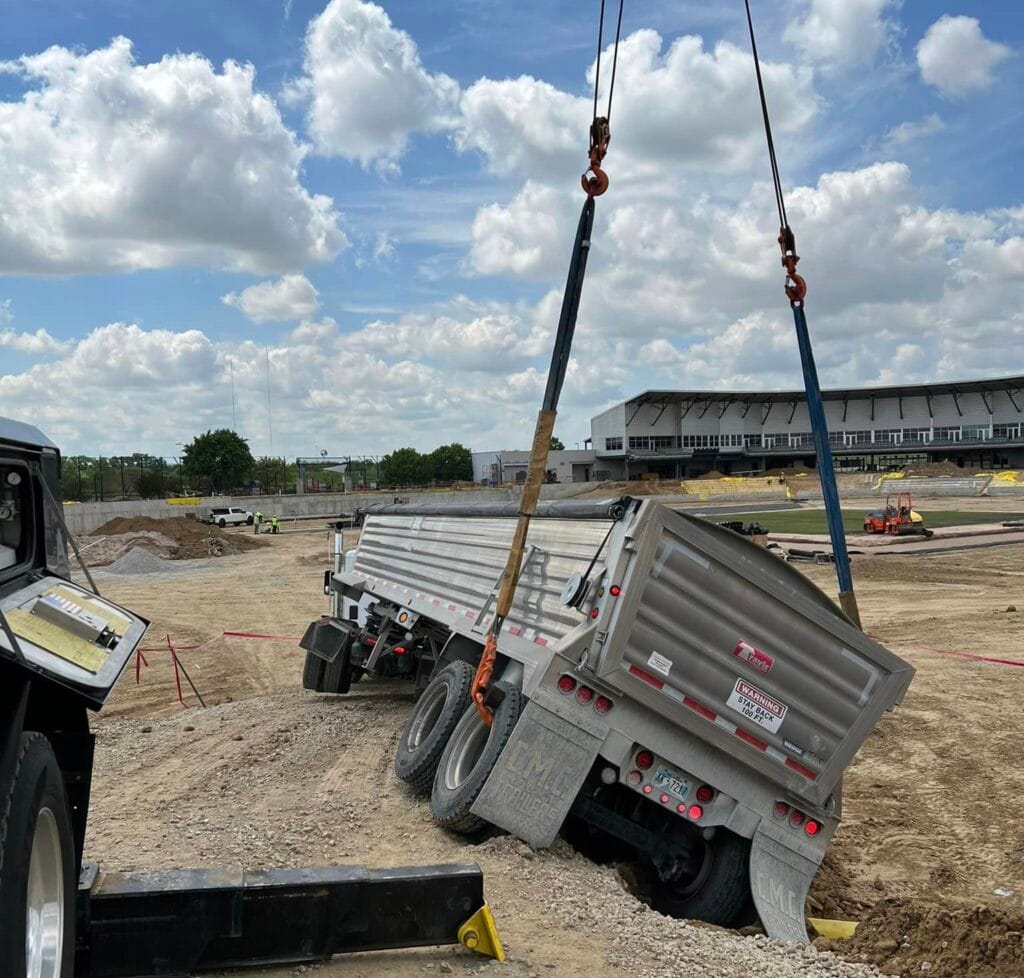
Ditches and embankments take more planning than a flat mud pull. A vehicle sitting at an angle can shift or roll once tension hits the line, so we stabilize it first and pull in stages. When the tow truck can’t get close, we run longer winch lines and use snatch blocks to change the pull angle. For steep drop-offs or tight spaces, we may use two trucks to keep the vehicle steady on its way up.
A lot of people wait too long to call, spinning tires or pushing until the vehicle sinks deeper. If you’re stuck and the first attempt doesn’t work, stop and call us. Trying to drive out can overheat a transmission, burn up a clutch, or bury the tires to the axles. Here are some common situations where professional recovery is the safer choice.
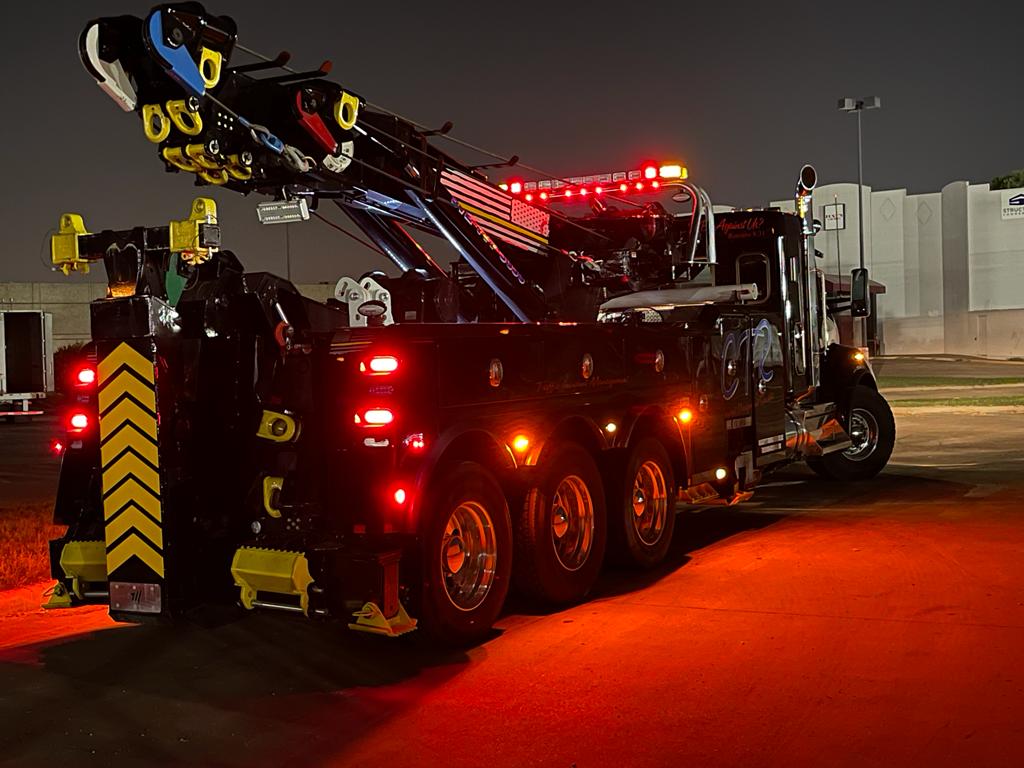
When a semi drops off the shoulder or a loader sinks at a job site, a standard wrecker won’t cut it. Our heavy duty crews use 35- and 50-ton rotators and large winches to recover tractor-trailers, dump trucks, and construction equipment from soft ground and embankments. We can also offload or transfer cargo first when the weight makes a direct pull unsafe.
Once the vehicle is back on solid ground, we check it over before anyone drives it. Off-road recoveries can damage things you don’t see right away, like bent tie rods, a cracked oil pan, a punctured radiator, or mud packed into brakes and wheel wells. Our operators check for leaks, steering issues, and tire damage, then tell you whether the vehicle is safe to drive or needs to be towed to a repair shop.
If it needs a tow, we load it on the spot and haul it to a shop, your home, or our yard. For commercial and fleet vehicles, we can also help with cargo transfer and debris cleanup so you don’t have to deal with a mess after we leave. Fleet managers and contractors get a clear rundown of what happened, what was done, and where the vehicle ended up. That helps with insurance claims and internal reports.
Dallas has more places to get stuck than most people expect. We handle recoveries along the Trinity River bottoms, at boat ramps around White Rock Lake and Lake Ray Hubbard, on construction sites and unpaved lots, and on rural roads at the edges of the city. Highway shoulders and medians along I-20, I-45, and Loop 12 are also common spots, especially after heavy rain when the ground beside the pavement softens.
Our crews are based in Dallas and run recovery calls 24/7, including storm days when calls pile up. When you call, tell us what kind of vehicle it is, how it’s sitting, and what the ground looks like. That helps us send the right truck the first time instead of making you wait for a second one. If you can safely send a photo, even better. Stay in your vehicle or well off the road while you wait.
Getting stuck is frustrating enough without waiting on a company that shows up with the wrong equipment. Here’s why Dallas drivers and fleets call CTR Towing.