Seven Hours Under Lights on Southbound I-35
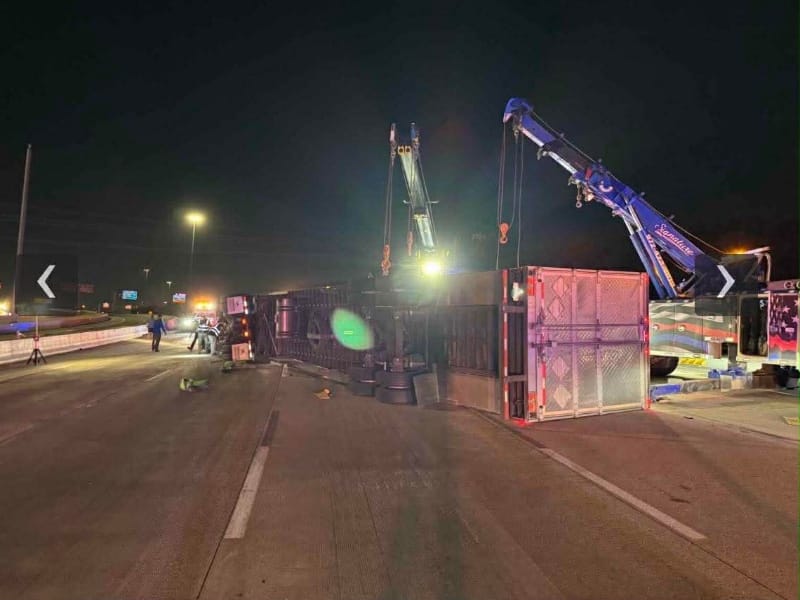
Some heavy towing calls hit different, and we can usually tell that before we even step out of the cab. This one had that heavy-recovery feel right away, the kind where every move has to stay calm and deliberate because the scene punishes shortcuts. We got the call just after 7:00 pm. It came in through the Dallas Sheriff’s Office for a Dallas semi recovery, on southbound I-35 at Zang Blvd in Dallas, Texas. A fully loaded tractor-trailer had rolled over and the scene needed quick control, heavy lifting, and roadway cleanup to get traffic moving again.
The trailer carried 42,000 pounds of cottage cheese, and the driver’s speed let the load shift hard to the passenger side. That shift put the whole combination in a bad spot fast, and the truck and trailer took major damage along the entire left side.
Staging the Scene
We arrived ready to handle both the recovery and the mess that comes with a rollover. Dallas Fire Department was on scene alongside the Dallas Sheriff’s Office, so we kept everything tight and coordinated from the first minute.
We assigned jobs immediately so every move had an owner and every operator knew the plan. That keeps the work smooth when traffic pressure builds and the scene stays active.
Here’s the exact lineup we put to work:
- Two 50-ton rotators
- One 25-ton stick boom
- Road tractor
- Two light-duty flatbeds
- Skid steer with broom attachment
- Absorbing materials for diesel and oil
One of the flatbeds carried the absorbing materials, and the other brought the skid steer so we could sweep and clear the roadway instead of leaving a slick, gritty surface behind.
Getting the Rig Back in Line Before the Upright
Our first goal was to straighten the truck and trailer enough to reduce the hazard and make space. We staged the two 50-ton rotators on the top side of the trailer and started controlled pick-and-push movements to bring the trailer back into a workable line.
The 25-ton stick boom assisted on the tractor to help manage the forces and keep the power unit from fighting the move. Once we had the combination straighter, traffic could start passing again, and that gave us the room we needed to set up for the upright without rushing it.
The upright plan in plain terms
We treated the rollover like a stability problem first, then a lifting problem second. We kept steady tension, watched the load behavior, and moved only when the unit agreed with the plan.
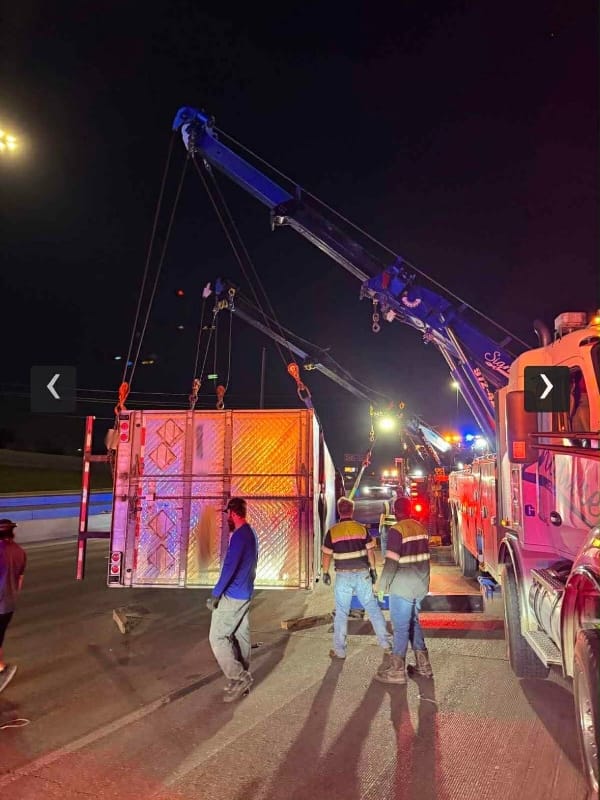
The two 50-tons handled the primary lift and push from the top side of the trailer. The 25-ton supported and guided the tractor side so the whole combination didn’t twist or surge. We stayed in constant communication so the move stayed controlled from start to finish.
We stayed on scene until just after 2:00 am, which made the job about seven hours from the initial call to the last unit clearing. When we handle Dallas semi recovery, we plan for the full picture, heavy recovery, spill control, and the clean surface that drivers need once lanes reopen.
Wrapping Up
This rollover involved diesel and oil on the roadway, so we used absorbing materials first, then followed with the skid steer and sweeper to clear residue and debris. That cleanup work matters just as much as the upright on a job like this, and it’s part of how we approach Dallas semi recovery, every time we get called to I-35 or anywhere else in Dallas. Our crew of 10 operators handled the recovery, cleanup, and coordination so responders could keep the scene safe, and so the roadway could return to normal.
CTR Towing Service Handles Your Dallas Semi Recovery, From Spill Control to Final Clearance
We built our response around doing Dallas semi recovery, with the right equipment already rolling, and we wrapped it up by clearing the scene fully so the next shift didn’t inherit loose ends. When agencies call CTR Towing Service for Dallas semi recovery, we show up ready to manage weight, damage, fluid spills, and traffic impacts. We finished this one with the unit recovered, the spill addressed, and the corridor back in service, which is exactly what Dallas semi recovery, is supposed to deliver.
FAQ
What should I do first if my truck rolls over?
Move to a safe spot if you can and call 911. If you cannot move safely, stay put, keep your seatbelt on, and follow instructions from responders.
What information helps a recovery team respond faster?
Share the exact location, lane direction, vehicle type, and if the trailer is loaded. If you know it, add cargo type, estimated weight, and any visible leaks or hazards.
Why does spilled diesel or oil change how the scene gets handled?
Fluids can spread fast and make the roadway slick, which raises the risk of secondary crashes. Cleanup often runs in parallel with recovery so the surface is stable before lanes reopen.
How do recovery teams decide where to place heavy trucks for a rollover?
They look at load position, ground conditions, traffic control zones, and where the safest anchor points exist. The goal is controlled movement that prevents sliding, twisting, or sudden shifts.
How long does a rollover recovery usually take?
It depends on cargo weight, damage, traffic control limits, and whether there is a spill or debris field. A lighter, clean rollover can be quicker, while a loaded unit with fluids and cleanup needs can take several hours.
What happens to the cargo after a rollover?
The shipper or carrier usually decides what gets salvaged, disposed of, or reloaded. Recovery teams may support the process by creating access, moving debris, and keeping the work area organized for the parties involved.